
REVIEW · PARATY
Paraty: Historic Centre Walking Tour & Cachaça Tasting
Paraty’s old town is more than a pretty collection of whitewashed buildings and uneven stones. Its streets carry stories of gold, sugar, coffee, pau brasil, Indigenous peoples, colonial rule, and Freemasonry. This 90-minute walking tour gives those details a clear order, so you can look at the town with more than your camera.
I like the focus on the town’s unusual Masonic symbols and the chance to finish with Gabriela cachaça, a sweet local drink flavored with honey, clove, and cinnamon. I also like the guides’ practical approach, especially Thiago, who is praised for clear explanations, patience, and helpful suggestions for the rest of your stay. The main caution is the pavement: Paraty’s historic streets can be slippery, and a late departure may leave you seeing less architectural detail in fading light.
Key points to know before booking
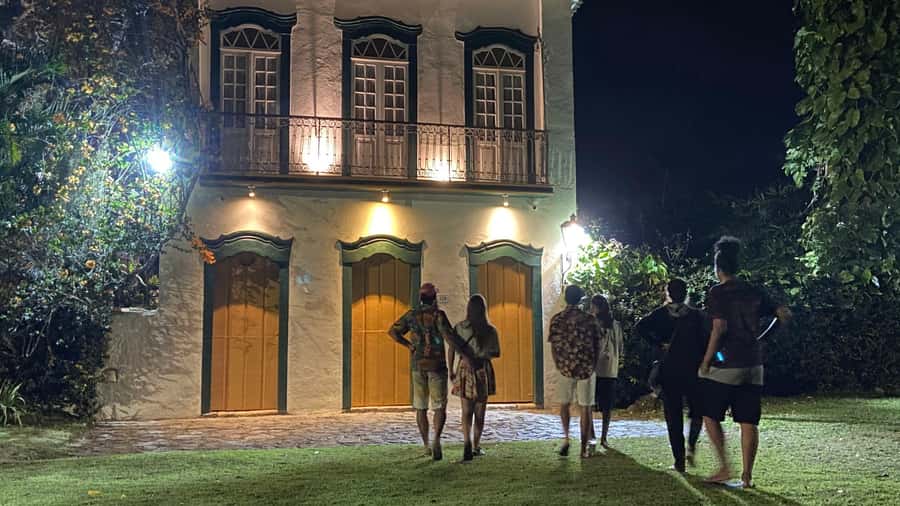
- Paraty’s Masonic clues: The tour explains how Freemasonry influenced the town’s design and buildings.
- A short, focused introduction: Ninety minutes is enough to get oriented without taking up a full morning or afternoon.
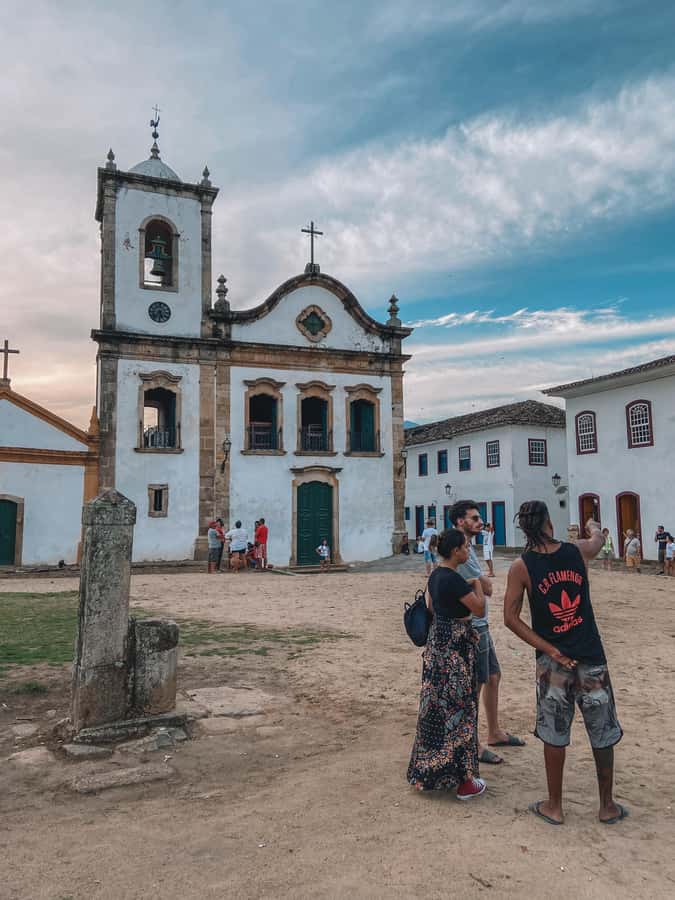
- Meet at Santa Rita’s Church: The walk begins and ends at Largo de Santa Rita, in front of the church.
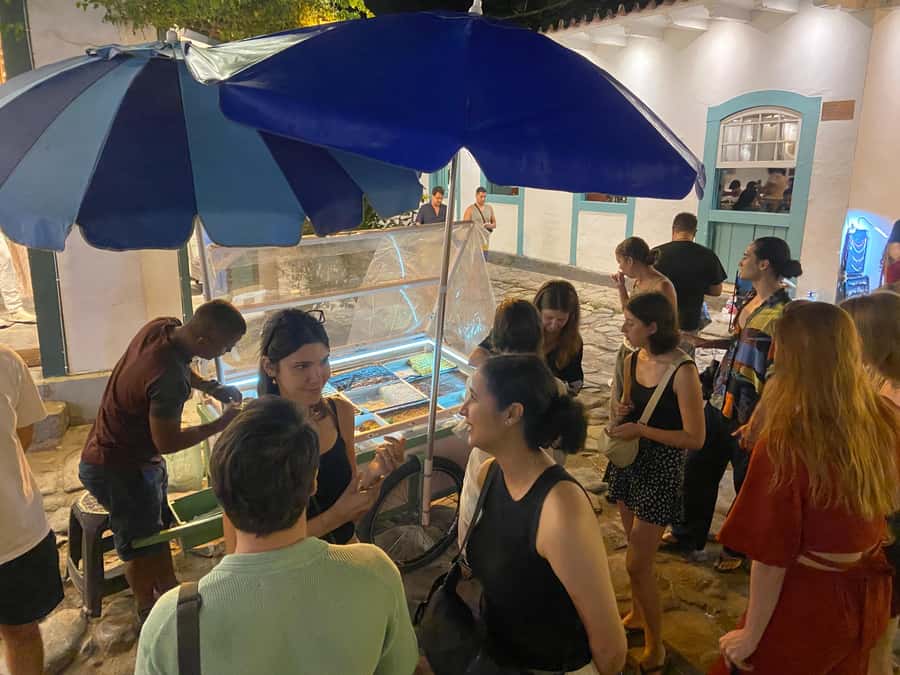
- Gabriela is the local finale: You taste cachaça mixed with honey, clove, and cinnamon at a local bar.
- Thiago is a strong guide choice: His clear storytelling and willingness to answer questions are major strengths.
- Wear shoes with grip: The old stones can be slick, and the activity is not suitable for people with mobility impairments.
Why Paraty makes sense with a guide
Paraty’s historic centre is easy to wander, but it is not always easy to understand. You can admire the doors, corners, churches, and street lines on your own, yet miss why the town developed in this particular way.
A guide gives the streets a framework. You learn about colonization and the original peoples of the area, then follow the economic cycles that shaped Paraty: gold, sugarcane, coffee, and pau brasil. Those subjects explain why this small coastal town mattered and why its architecture looks more deliberate than it first appears.
I would book this early in your stay. After the walk, you can return to places that caught your eye, take better photographs, or choose restaurants and shops with more context. The tour is not designed as a long academic lecture. It is a compact introduction that helps the rest of Paraty make more sense.
The town is recognized by UNESCO as Cultural Heritage of Humanity, with cultural, gastronomic, and biodiversity importance. The tour connects those broad labels to the streets beneath your feet. That is its real value.
More Cachaca and Rhum Agricole Tours in the world:
- Rio: Pub Crawl in Lapa with Cachaça Tasting and Live Samba
★ 4.7 · 881 reviews - Topper’s Rhum Distillery Tour in St Maarten
★ 5.0 · 784 reviews - Paraty: Jungle Waterfalls and Cachaça Distillery Jeep Tour
★ 4.7 · 491 reviews
Starting at Santa Rita’s Church
The meeting point is in front of Santa Rita’s Church at Largo de Santa Rita. This gives the tour a clear landmark and avoids the confusion that can come with meeting at an unnamed street corner.
From there, you enter the historic centre on foot. Expect a guided sightseeing walk rather than a visit built around museum interiors or formal exhibits. The key attraction is the setting itself: Paraty’s old streets, architecture, and the stories attached to them.
You should arrive in comfortable footwear, ideally with a sole that grips well. The warning about slippery stones is not a minor detail. Uneven, polished pavement can make the walk tiring or awkward, especially after rain. Sandals with little support are a poor choice.
The route returns to Largo de Santa Rita at the end. No transport is involved, so you can continue exploring from the same central area.
Following the town’s cycles of wealth
One of the best parts of this tour is the way it links Paraty’s past to changing trade. The guide covers the gold cycle, along with sugarcane, coffee, and pau brasil. These subjects give you a way to read the town’s buildings and streets as evidence of commercial life.
Gold helps explain Paraty’s place in colonial Brazil. Sugarcane points to local production and the importance of distilled spirits. Coffee connects the town to a later period of Brazilian commerce, while pau brasil recalls an earlier resource that helped attract Portuguese interest.
You will not get a long, detailed course on each industry in 90 minutes. That is not a weakness, but you should understand the format. The tour gives you a readable outline and selected stories, then leaves you with subjects to explore further if you want more depth.
The guide also discusses colonization and the area’s original peoples. This matters because Paraty’s colonial beauty can otherwise make the past seem tidy and harmless. A useful walking tour should show both the visual appeal of the old centre and the forces that shaped it.
The Freemasonry stories are the surprise
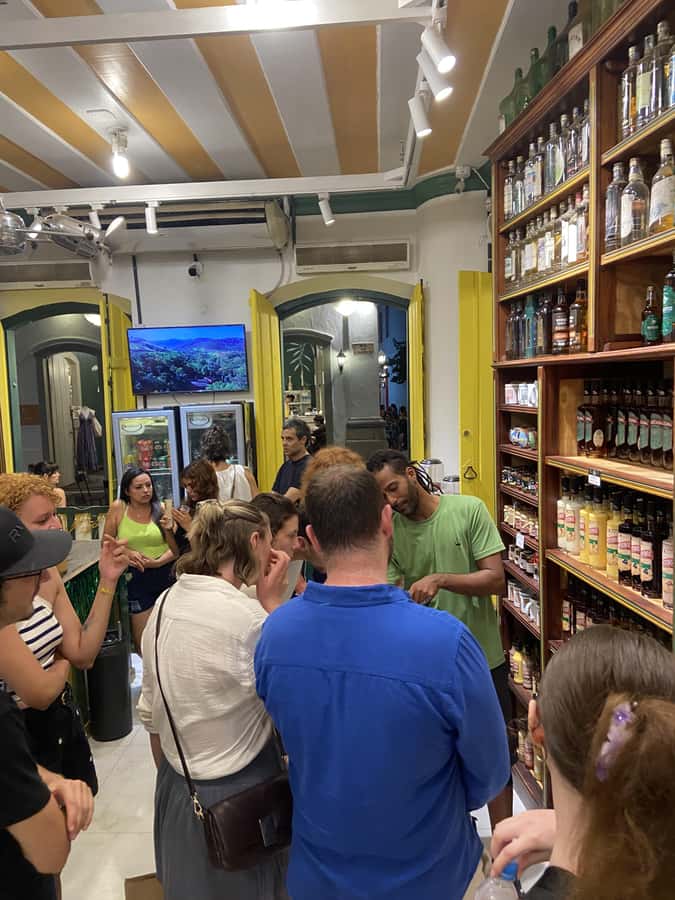
The subject that seems to make the strongest impression is Freemasonry. Several guides are praised for explaining its influence on Paraty, and this is one of the tour’s more unusual themes.
You learn about the role Freemasonry played in the town’s development and the clues associated with it. That gives you a reason to study details you might otherwise pass without a second glance. The tour turns architecture into a kind of puzzle, though the emphasis remains on explanation rather than theatrical mystery.
I especially like this angle because it separates the experience from a basic old-town stroll. Many walking tours cover churches, dates, and famous residents. This one adds a local thread that helps explain the logic behind Paraty’s construction.
The guide’s ability to answer questions matters here. Thiago receives especially strong praise for making the subject clear, staying engaged, and encouraging curiosity. Chaqa is also named positively for spending extra time with the group and offering useful suggestions for the rest of a Paraty stay.
More Rum Tastings in the world:
- Eastern Madeira: Full-Day Tour with Rum Tasting
★ 4.7 · 1,575 reviews - Rum Tasting Tour at Casa BACARDÍ in Puerto Rico
★ 4.5 · 1,095 reviews - Rum Tasting and Food Walking Tour in Nassau Bahamas
★ 5.0 · 1,030 reviews - Mount Gay Signature Rum Tasting Experience
★ 5.0 · 640 reviews
What the 90-minute route feels like

Ninety minutes is a sensible length for this activity. It is long enough to cover the historic centre and major themes, but short enough to fit around meals, boat trips, or other plans.
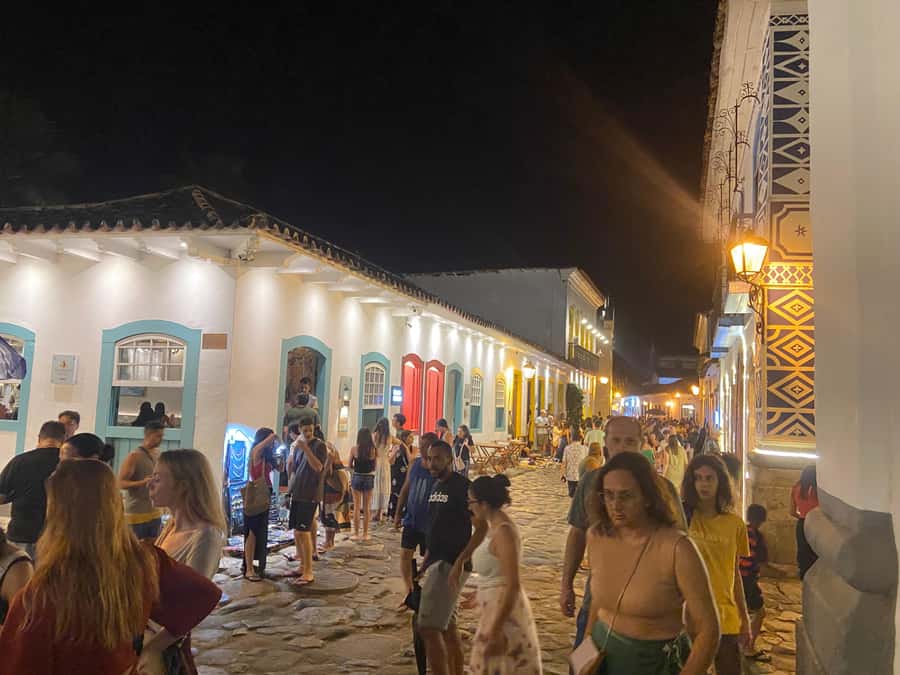
The tour is primarily walking and sightseeing, so you should expect regular time on cobbled or uneven streets. The pace and exact route can vary with the guide and group, but the central focus remains the same: history, architecture, and local curiosities.
A morning or earlier afternoon departure is the better choice if you want to see the architecture clearly. One participant specifically noted that a later start can mean missing some visual details after dark. Even if the town feels atmospheric in the evening, low light makes it harder to inspect façades, street patterns, and decorative details.
The walk is available in English, Portuguese, and Spanish. That is useful in a place where the quality of explanation matters more than simply following a route. Private and small-group options are also available, so you can look for a format that suits your preference for conversation and questions.
Ending at a local bar with Gabriela
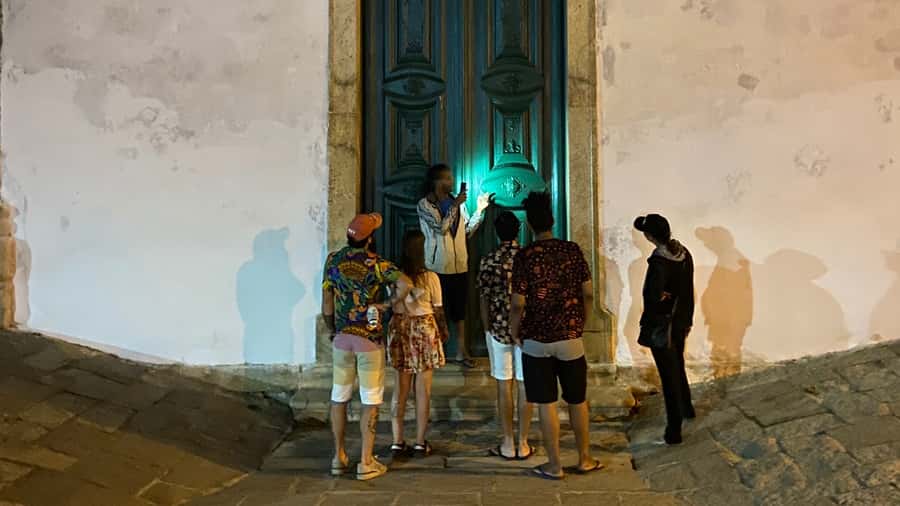
The final stop is a local bar, where you taste Gabriela cachaça. The tasting is included, but food and other drinks are not.
Gabriela is made with white cachaça, honey, clove, and cinnamon. It was created in honor of Jorge Amado’s novel Gabriela, Cravo e Canela, and is produced only in Paraty. That local connection makes the tasting more than a generic alcohol sample. It is a small piece of regional food culture, tied to the town’s sugarcane tradition and literary identity.
The drink is sweet and spiced, so it may appeal even if straight cachaça is not your style. Still, do not mistake the tasting for a full food tour. You receive the included sample, while any additional drinks or food cost extra.
The bar stop also gives the walk a relaxed finish. You have spent the first part listening and looking closely, then get a chance to pause and try something associated with Paraty itself. It is a modest finale, but a well-chosen one.
The guide can make or break this walk
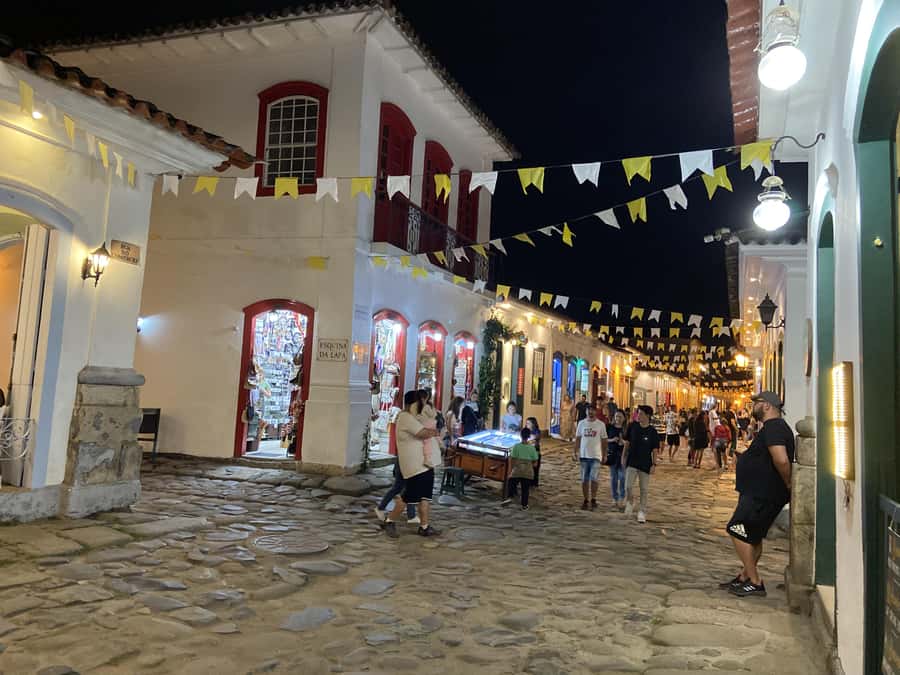
A historic-centre tour depends heavily on the person leading it. Paraty’s streets are already attractive, so the guide’s job is to add meaning without burying you in dates.
Thiago is repeatedly praised for his passion for Paraty, his clear historical explanations, and his willingness to answer questions. That combination is important. You want enough structure to understand the town, but also enough flexibility to ask about a symbol, building, or local custom that catches your attention.
One especially useful feature is the practical advice you may receive for the rest of your visit. A good local guide can point you toward subjects, areas, or activities that fit your interests, even though those suggestions are not a formal part of the tour.
The experience is offered in Portuguese, Spanish, and English. If your booking allows a choice of guide or language, select the option that lets you ask questions comfortably. This is not a silent photo walk. The history and architecture are the main reason to book.
Is the $19 price fair?
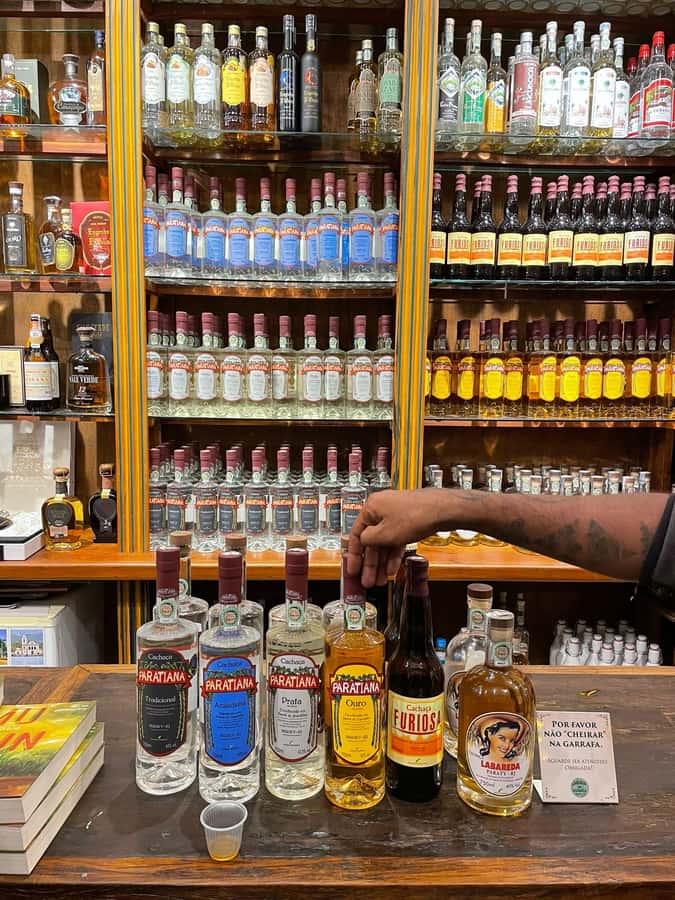
At $19 per person, the tour sits in the affordable range for a guided introduction to Paraty. You are paying for 90 minutes with a local professional guide, a structured route through the historic centre, and a Gabriela tasting.
The value is strongest if you are new to Paraty or prefer context over aimless wandering. The walk can save you from seeing the old centre as a series of attractive but disconnected façades. It also gives you a local drink to try without arranging a separate tasting.
The value is less obvious if you have already taken a detailed Paraty history tour or are happy to explore without explanations. One rating described the price as slightly above what the participant felt was delivered, although the same assessment still called the tour interesting and the tasting a nice addition.
Private or small-group availability may suit people who want more room for questions, but the price and format can vary by booking. Check the exact option before paying.
Free cancellation up to 24 hours before the activity and reserve-now, pay-later booking make it easier to fit the walk into a changing itinerary. Those policies are useful, but the decision should rest mainly on your interest in history and guided sightseeing.
Who should book this experience
I would recommend this tour to first-time visitors who want a quick, useful orientation to Paraty. It also suits anyone curious about colonial trade, Masonic influence, local architecture, and cachaça.
History-minded visitors will get the most from it, especially if they enjoy asking questions. Food and drink enthusiasts will appreciate the Gabriela tasting, though this is not a meal-based tour.
The activity is less suitable if you dislike walking on uneven ground, need step-free access, or want a long stop inside museums. It is listed as unsuitable for people with mobility impairments and people over certain age limits, including over 70, 75, and 95. Those overlapping limits are not clearly explained, so check the current booking details if age or mobility is a concern.
People with hearing impairments are also listed among those for whom the activity is not suitable. Pets are welcome, which is a useful point if you are exploring Paraty with a dog, though you should still be prepared for slick stones and a busy walking route.
Small details that improve the experience
Choose an earlier departure if architecture matters to you. Good light makes the old centre easier to study, and you avoid the concern that parts of the route may be harder to see after dark.
Wear shoes with firm support and anti-slip soles. This is the single most practical preparation tip.
Keep your questions ready. Freemasonry, colonial trade, and the town’s construction logic are the subjects most likely to reward a curious approach. The guide is there to explain, not simply lead you from one photo stop to the next.
If you have only one day in Paraty, this tour can help you decide how to spend the rest of it. If you have several days, it gives you a useful first look before returning to the centre at your own pace.
Should you book the Paraty walking tour?
Book it if you want Paraty’s historic centre explained by someone local rather than simply photographed. The strongest reasons are the Freemasonry focus, the clear discussion of the town’s trade cycles, the chance to ask questions, and the Gabriela tasting at the end.
Skip it if you want a long food tour, a museum-heavy outing, or an easy route without slippery cobbles. For $19, it is a reasonable way to get your bearings and learn the stories behind Paraty’s streets, especially early in your stay. Wear proper shoes, choose a daylight start, and keep your expectations focused on a compact history walk with a local drink at the finish.
FAQ
Where does the Paraty walking tour start?
The tour starts in front of Santa Rita’s Church at Largo de Santa Rita.
How long does the activity last?
The guided walking tour lasts 90 minutes.
What languages are available?
The tour is available in English, Portuguese, and Spanish.
What does the tour cover?
It covers Paraty’s historic centre, including colonization, original peoples, Freemasonry, architecture, local curiosities, and the gold, sugarcane, coffee, and pau brasil cycles.
Is the cachaça tasting included?
Yes. A free tasting of Gabriela cachaça is included.
What is Gabriela cachaça?
Gabriela is a sweet mixture of white cachaça, honey, clove, and cinnamon. It was created in honor of Jorge Amado’s Gabriela, Cravo e Canela, and is produced only in Paraty.
Are food and other drinks included?
No. Food and drinks beyond the included Gabriela tasting are not included.
What should I wear?
Wear comfortable shoes with good grip. The historic centre’s streets can be slippery, so anti-slip footwear is recommended.
Are pets allowed?
Yes. Pets are welcome on the tour.
More Walking Tours in the world
- Nassau: Rum Tastings and Culinary Walking Tour
★ 4.9 · 200 reviews - EAST MADEIRA:,Peaks, Forest walk,Thatched Roofs, Rum factory
★ 4.9 · 32 reviews - Paraty Historic District: Walking Tour with Cachaca Tasting
★ 3.7 · 12 reviews - Intensive Old San Juan Opulent Coffee/Rum/Tastings Walking Tour
★ 5.0 · 11 reviews
More History Trips in the world
- St. Nicholas Abbey Heritage Great House and Rum Distillery Tour
★ 4.5 · 257 reviews - Villainous History and Rum Tasting Tour in York Indoor Experience
★ 5.0 · 111 reviews - Historical Tour with Cachaça Tasting – BY PARATY TOURS
★ 5.0 · 40 reviews - Monkey Feeding & Historic Sugar Plantation & Rum Distillery
★ 4.7 · 31 reviews
Just added around the world
- Appleton Estate Rum Tour and Tasting from Falmouth★ 4.5 · 2 reviews
- Kombucha Rum and Craft Beer Private Tour★ 3.5 · 6 reviews
- St Lucia Food & Rum Tasting – Rodney Bay Edition★ 5.0 · 10 reviews
- Rum Tasting Experience in the Old Barrel House★ 4.5 · 9 reviews
- Soufriere Excursion with Rum & Chocolate Tasting★ 4.5 · 11 reviews
- Rum & Chocolate Tasting Tour : Journey into Flavor★ 5.0 · 6 reviews
- Old San Juan and Rum Factory Full-Day Tour: Minimum 8+ people★ 5.0 · 10 reviews
- Old San Juan Private Tour with Barrilito Rum Experience★ 5.0 · 4 reviews
Cachaca & Rhum Agricole Tours, compared.
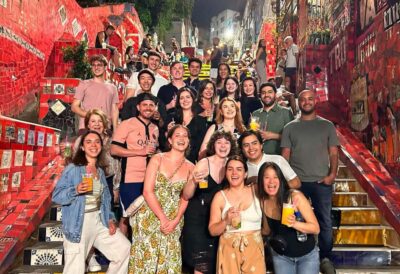
Pub Crawl in Lapa with Cachaça Tasting and Live Samba
Read our review →

Jungle Waterfalls and Cachaça Distillery Jeep Tour
Read our review →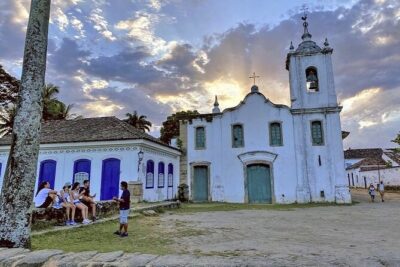
Historical Tour with Cachaça Tasting – BY PARATY TOURS
Read our review →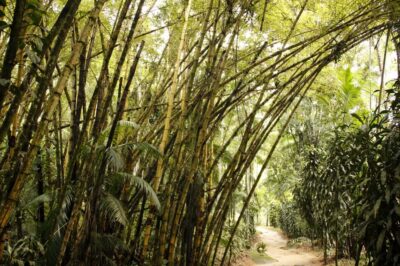
Full-Day Jungle Jeep Waterfall and Cachaça Distillery Tour
Read our review →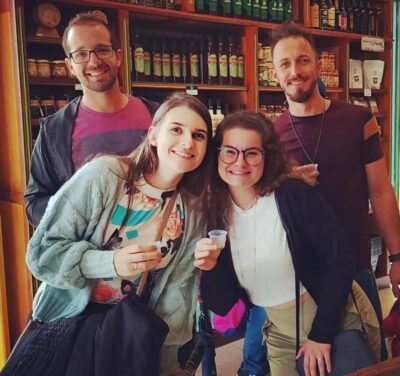
Paraty Historic District: Walking Tour with Cachaca Tasting
Read our review →

Browse the lists this tour appears in